Source explosion proof borosilicate glass lampshade for lighting, decor, and industrial use
Compare 30 listings for explosion proof borosilicate glass lampshade options featuring heat resistance and thermal shock properties. Buyers can evaluate specifications like size, finish, and packaging from suppliers in China.
Key considerations
Products List





Comprehensive Sourcing Guide
Sourcing Guide for Explosion-Proof Borosilicate Glass Lampshades
Understanding Material Science and Thermal Performance
When sourcing explosion-proof borosilicate glass lampshades, the primary differentiator lies in the specific glass composition and its ability to withstand extreme thermal gradients. The core material requirement for this application is borosilicate glass, which offers superior resistance to thermal shock compared to standard soda-lime glass. In the current market, suppliers often list materials as "Borosilicate & Soda Lime," indicating that buyers must verify the specific percentage of borosilicate content to ensure the "explosion-proof" claim is valid for high-intensity lighting applications. Standard borosilicate glass is engineered to handle rapid temperature changes without fracturing, a critical feature for lamps that generate significant heat.
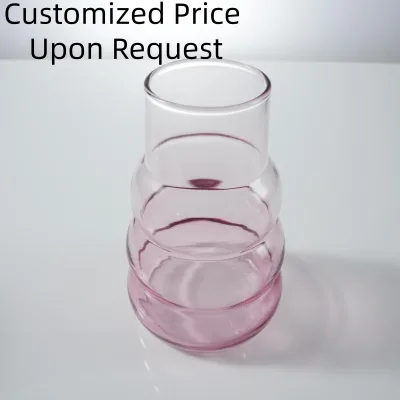
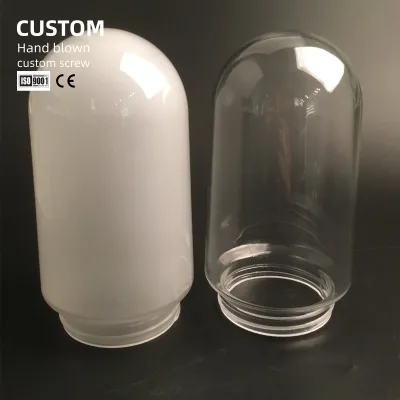
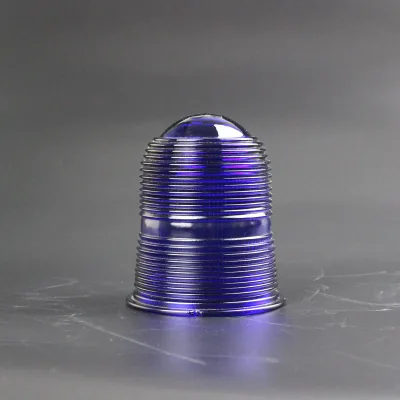
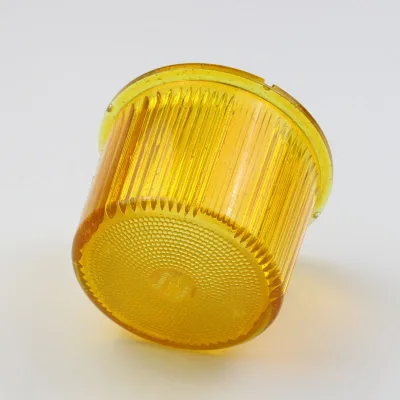
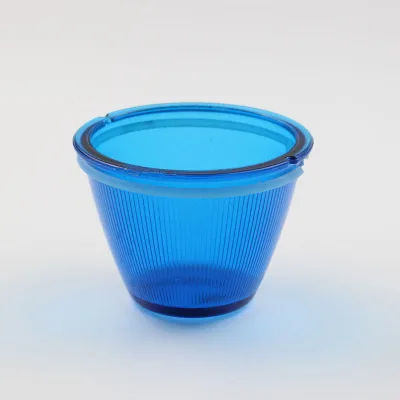
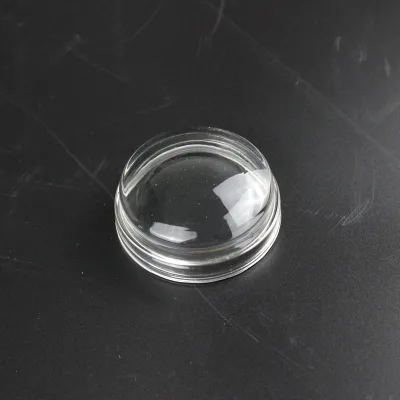
The physical properties of the glass are equally important. The observed product attributes indicate that the material is available in "Clear" and "Colored" finishes, allowing for aesthetic customization without compromising structural integrity. The processing methods listed include "Moulded" and "Tempered" techniques. Tempering is a vital step for explosion-proof applications; it involves heating the glass to high temperatures and then rapidly cooling it to induce surface compression. This process significantly increases the strength of the glass, ensuring that if the lamp does fail under extreme stress, it shatters into small, granular pieces rather than sharp, dangerous shards. Buyers should confirm that the "Tempered" process is applied to the final product, as this is the industry standard for safety-critical lighting components.
Furthermore, the edge treatment plays a role in the overall durability of the lampshade. The supply data notes "Cut edge" as a standard finish, but for explosion-proof applications, polished edges are often preferred to eliminate micro-fractures that could propagate under thermal stress. The availability of "Handmade" crafts suggests that some suppliers offer bespoke solutions where manual finishing might provide a higher degree of quality control, though this can impact lead times and consistency. The "Brushed Nickel" and "Polished Steel" finishes mentioned in the context refer to the metal hardware or frames often paired with the glass, which must also be heat-resistant to maintain the integrity of the assembly.
Technical Specifications and Design Standards
Defining the technical specifications for an explosion-proof lampshade requires a precise understanding of dimensions, thickness, and design geometry. The market data reveals a variety of product models, including specific identifiers like 72116, 72117, 72118, 72111, 72119, and 72115, alongside specialized codes such as "JSV-EX GS" and "glass-ex." These model numbers often correspond to specific thickness standards or design configurations. For instance, one entry cites a standard of "5mm," which serves as a baseline for thickness in certain industrial applications, while other entries list "custom" standards, indicating that buyers can request specific thicknesses tailored to their thermal load requirements.
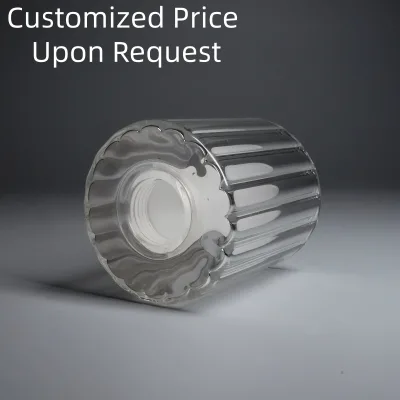
The shape of the lampshade is another critical specification. The observed data includes "Round" and "Cylinder" shapes, which are the most common geometries for explosion-proof fixtures. A cylindrical design often provides uniform heat distribution, whereas a round design might be preferred for specific aesthetic or directional lighting needs. The "Custom-Size" availability is a significant factor for procurement teams, as explosion-proof requirements often dictate specific dimensions to fit into hazardous zone enclosures. The "Single package size" of 27x21x21 cm provides a reference point for logistics planning, though custom orders will alter these dimensions.
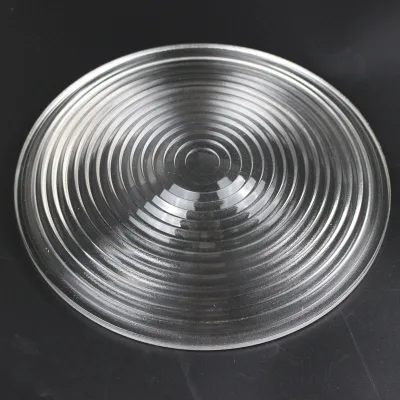
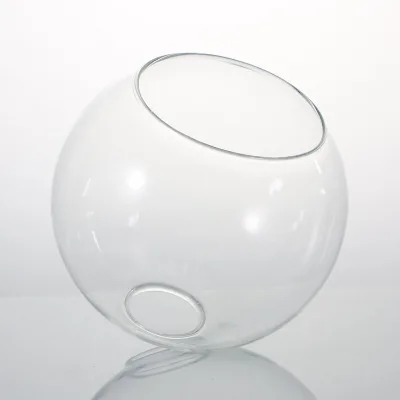
Design styles range from "Modern" to "Asian," "Transitional," and "Other," suggesting that safety does not have to come at the expense of aesthetics. The "Product name" field explicitly mentions "glass lamp shade" and "borosilicate glass ball," highlighting the diversity in form factors. For explosion-proof applications, the "Feature" list emphasizes "Heat Resistant" and "Thermal Shock" capabilities. These are not merely marketing terms but functional requirements. Buyers must verify that the glass can withstand the specific temperature range of their intended lighting source, whether it is high-wattage industrial HID lamps or high-temperature LED arrays. The "Application" field lists "Lamp Lighting," "Decorative," "Indoor," and "Light Covers," confirming that these products are versatile but must be selected based on the specific environmental conditions of the installation site.
Compliance, Certification, and Safety Verification
In the realm of explosion-proof equipment, compliance is not optional; it is the foundation of procurement safety. The supplied facts indicate that products carry "CE" certification, and some listings include "RoHS" and "ISO" certifications. CE marking is a mandatory conformity mark for products sold within the European Economic Area, indicating that the product meets EU safety, health, and environmental protection requirements. For explosion-proof applications, the CE mark often implies compliance with specific directives regarding low voltage and electromagnetic compatibility, but buyers must ensure the specific directive covers the hazardous area classification relevant to their facility.
RoHS (Restriction of Hazardous Substances) compliance is another critical standard, ensuring that the glass and associated materials do not contain restricted substances like lead, mercury, or cadmium. This is particularly important for environmental safety and worker health during manufacturing and disposal. ISO certification suggests that the supplier adheres to international management system standards, which can be a proxy for consistent quality control processes. However, the presence of these certifications on a listing does not automatically guarantee that every unit in a custom order will be certified. Buyers must request specific test reports or certificates of conformity for the exact batch they are purchasing.
The "Warranty(Year)" of 3-Year is a notable data point, suggesting that reputable suppliers stand behind the durability of their glass. A three-year warranty on explosion-proof glass implies confidence in the material's resistance to thermal fatigue and mechanical stress. However, warranties often have exclusions regarding improper installation or exposure to conditions outside the specified parameters. The "Feature" list also includes "Eco-Friendly" and "Satety" (Safety), reinforcing the dual focus on environmental responsibility and user protection. When evaluating suppliers, buyers should ask for the specific standards against which these certifications were granted, such as IEC 60079 for explosive atmospheres, to ensure the product is suitable for the intended hazardous zone.
Cost Drivers and Procurement Economics
The cost of sourcing explosion-proof borosilicate glass lampshades is influenced by several variables, including material purity, processing complexity, and order volume. The observed price range in the market is 0.3 to 8 USD, but this wide variance likely reflects differences in unit size, thickness, and the extent of customization. The "MOQ" (Minimum Order Quantity) data presents a significant consideration for buyers. While some listings show an MOQ of 50 pcs, others indicate a standard MOQ of 10000 units. This discrepancy suggests that the market is segmented between small-batch custom orders and large-scale industrial procurement.
For buyers requiring explosion-proof specifications, the cost drivers are primarily the "Tempered" processing and the "Custom-Size" capabilities. Tempering requires specialized furnaces and precise temperature control, adding to the manufacturing cost. Similarly, custom sizing involves additional setup time and potential waste of raw materials, which suppliers factor into the unit price. The "Selling Units" are often listed as "Multiple of 100," which can impact the total order value and shipping logistics. Buyers must calculate the total cost of ownership, including shipping, which is affected by the "Packing" method. The data mentions "Carton," "Pallet," and "Wooden Crate" as packaging options. For heavy or fragile glass items, wooden crates provide superior protection but add to the shipping weight and cost.
The "Product Weight" of 0.5 kg per unit is a useful metric for freight estimation. However, for larger or thicker custom orders, the weight will vary. Buyers should also consider the "Place of Origin," which is listed as "China" and specifically "Shanghai." Sourcing from this region can offer competitive pricing due to established manufacturing clusters, but buyers must account for lead times and potential supply chain disruptions. The "Brand Name" Bo-glass is mentioned, but buyers should not rely on brand recognition alone; instead, they should focus on the technical specifications and the supplier's ability to meet the specific explosion-proof requirements of their project.
Supplier Evaluation and Quality Assurance
Evaluating a supplier for explosion-proof glass components requires a rigorous assessment of their manufacturing capabilities and quality control systems. The "Craft" attribute of "Handmade" suggests that some suppliers rely on skilled artisans, which can be beneficial for complex custom designs but may introduce variability. For high-volume industrial orders, a balance between automated "Moulded" production and manual inspection is ideal. Buyers should verify the supplier's "Edge treatment" processes, as the transition from raw cut edges to finished, polished edges is a critical step in preventing stress concentrations that could lead to failure.
The "Logo" customization option indicates that suppliers are willing to work with buyers on branding, which is common in B2B procurement. However, the application of a logo should not compromise the structural integrity of the glass. The "Feature" of "Eco-Friendly" and "Satety" should be backed by tangible evidence, such as waste management practices and safety protocols in the factory. Buyers should request a factory audit or a detailed quality assurance plan that outlines how the "Tempered" process is monitored and recorded.
Quality control should extend to the final packaging. The "Package" and "prod_packing" attributes mention "Carton" and "Standard export packing." For explosion-proof glass, the packaging must be robust enough to prevent breakage during transit, which could compromise the safety rating of the product. The "Single package size" of 27x21x21 cm provides a baseline, but custom orders may require reinforced packaging. Buyers should also verify the "Product Weight" accuracy, as discrepancies can indicate quality control issues in the manufacturing process.
Long-Term Procurement and Application Strategy
Selecting the right explosion-proof borosilicate glass lampshade is a long-term decision that impacts safety, maintenance costs, and operational continuity. The "Application" field lists "Lamp Lighting," "Decorative," "Indoor," and "Light Covers," indicating that these products are used in diverse environments. For industrial applications, the "Heat Resistant" and "Thermal Shock" features are paramount. Buyers should ensure that the glass is compatible with the specific lighting technology they intend to use, whether it is high-intensity discharge lamps or high-power LEDs.
The "Design Style" options, including "Modern," "Asian," and "Transitional," allow for aesthetic integration into various facility designs. However, the primary function of the lampshade is safety, and aesthetics should not override technical requirements. The "Warranty" of 3 years provides a buffer against early failures, but buyers should establish a clear protocol for warranty claims and replacements. The "Custom-Size" availability ensures that the lampshade can be tailored to fit existing fixtures or new installations, reducing the need for costly modifications to the lighting system.
In the long term, buyers should consider the "Standard" and "prod_standard" of 5mm or custom thickness. Thicker glass may offer better protection but could increase weight and heat retention. The "Process" of "Tempered" and "Moulded" should be consistent across all units to ensure uniform performance. Buyers should also monitor the "Material" composition, ensuring that the borosilicate content remains high and that the glass is free from impurities that could weaken its structure. By focusing on these technical and operational factors, buyers can secure a reliable supply of explosion-proof glass lampshades that meet their safety and performance needs.
Summary of Key Sourcing Parameters
To facilitate a streamlined procurement process, the following table summarizes the critical parameters observed in the market for explosion-proof borosilicate glass lampshades. This table serves as a checklist for buyers to verify against supplier data sheets and product listings.
| Parameter | Observed Value / Range | Verification Requirement |
|---|---|---|
| Material | Borosilicate Glass, Soda Lime | Confirm % Borosilicate for thermal shock resistance |
| Certification | CE, RoHS, ISO | Request specific test reports for hazardous zones |
| Thickness | 5mm (Standard), Custom | Verify thickness against thermal load requirements |
| Shape | Round, Cylinder | Ensure geometry matches fixture design |
| Processing | Moulded, Tempered, Handmade | Confirm tempering process and edge treatment |
| MOQ | 50 pcs to 10,000 units | Align order volume with budget and storage |
| Packing | Carton, Pallet, Wooden Crate | Select based on fragility and shipping distance |
| Origin | China (Shanghai) | Account for lead times and logistics |
| Warranty | 3-Year | Review terms for coverage of thermal failure |
| Features | Heat Resistant, Thermal Shock, Eco-Friendly | Validate claims with technical data sheets |
By adhering to these parameters and maintaining a rigorous approach to supplier evaluation, buyers can successfully source high-quality, explosion-proof borosilicate glass lampshades that ensure safety and reliability in their operations.
FAQs
What certifications are available for explosion proof borosilicate glass lampshades?
Products typically carry CE certification, with some listings also including RoHS and ISO marks. Buyers must verify that specific test reports accompany the batch to ensure compliance with hazardous area directives like IEC 60079.
Which material composition ensures thermal shock resistance for these lampshades?
Borosilicate glass is the primary material required for superior thermal shock resistance compared to standard soda-lime glass. Suppliers often list both materials, so buyers must confirm the specific borosilicate percentage for high-intensity applications.
Can buyers request custom sizes and shapes for these glass lampshades?
Yes, custom sizes and shapes like round or cylinder are available to fit specific hazardous zone enclosures. The product models 72116 through 72119 and glass-ex codes indicate configurations that can be tailored to unique thermal load requirements.
What processing methods ensure the glass is safe for explosion proof use?
Tempering is the critical process that induces surface compression to prevent dangerous shards upon failure. Suppliers offer moulded and tempered options, with cut or polished edge treatments to eliminate micro-fractures that could propagate under stress.
How do minimum order quantities vary for these glass lampshades?
Minimum order quantities range from 50 pieces for small batches to 10,000 units for standard industrial procurement. The selling units are often multiples of 100, which impacts total order value and shipping logistics for different buyer needs.
What warranty periods are offered for explosion proof borosilicate glass lampshades?
Reputable suppliers often provide a three-year warranty, indicating confidence in the material's resistance to thermal fatigue. This warranty covers durability against mechanical stress but typically excludes damage from improper installation or conditions outside specified parameters.